NeuroKit® ready for clinical studies in the USA
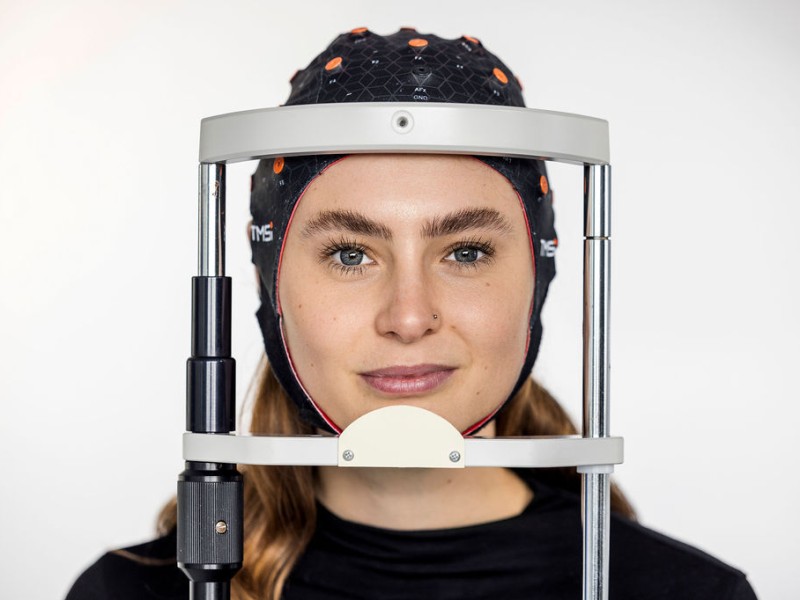
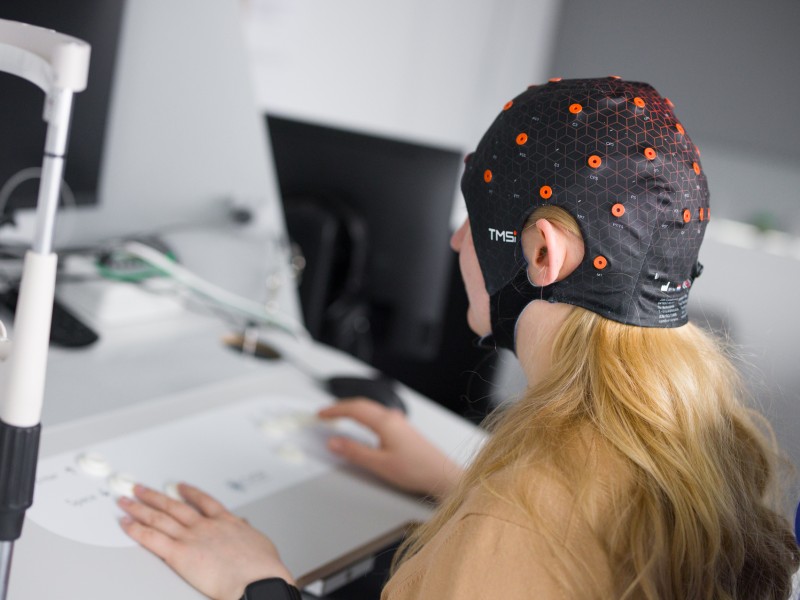
NeuroKit®, CHDR’s portable CNS-testing platform, has been validated internally. And thanks to a strategic partnership with Evolution Research Group and Lotus Clinical Research, NeuroKit will soon be operational in the USA.
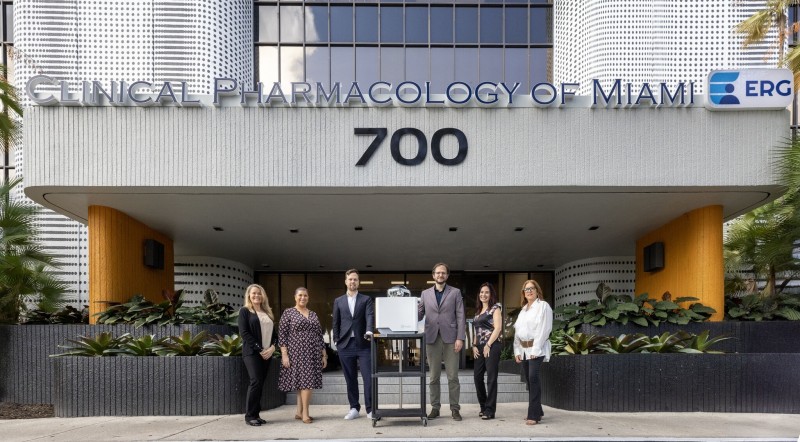
‘2025 has been an exciting year, in which we completed two crucial validation trials’, says Dr Vasilis Exadaktylos. As Senior Manager of Wearable Solutions and New Services, he is responsible for the development of NeuroKit. ‘We can now say with confidence that NeuroKit can reproduce the outcomes of our NeuroCart® measurements in healthy participants and quantify drug effects in a similar way. Another milestone is the strategic partnership with Evolution Research Group (ERG) and Lotus Clinical Research, who will be using our NeuroKit in the coming years in clinical studies across the United States.’
Expanding CNS research
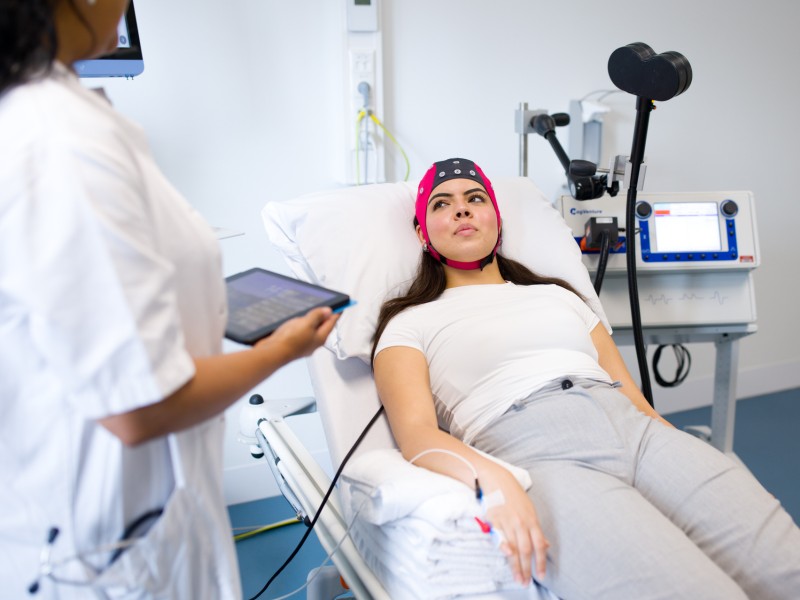
For more than three decades, NeuroCart, a validated test battery to measure CNS drug effects, has been the cornerstone of CHDR’s CNS research. In the course of many studies, an extensive database was built detailing the intended and unintended CNS effects of a wide variety of compounds. Researchers at CHDR have gained extensive experience in interpreting NeuroCart measurements in early-phase clinical drug development. ‘Now, with NeuroKit, we want to apply that knowledge more broadly,’ says Exadaktylos. ‘We will contribute to research at other locations, utilising our expertise in the field of CNS pharmacodynamic testing. This means that our reach will not only expand geographically, but we can also involve a wider variety of patients in addition to our work in healthy participants. Our partners in the United States conduct many early-phase patient trials. So, in the coming years, we want to be able to provide value in patient clinical studies by using the NeuroKit and add relevant patient data to our database, further increasing its scientific and practical value.’
Validation
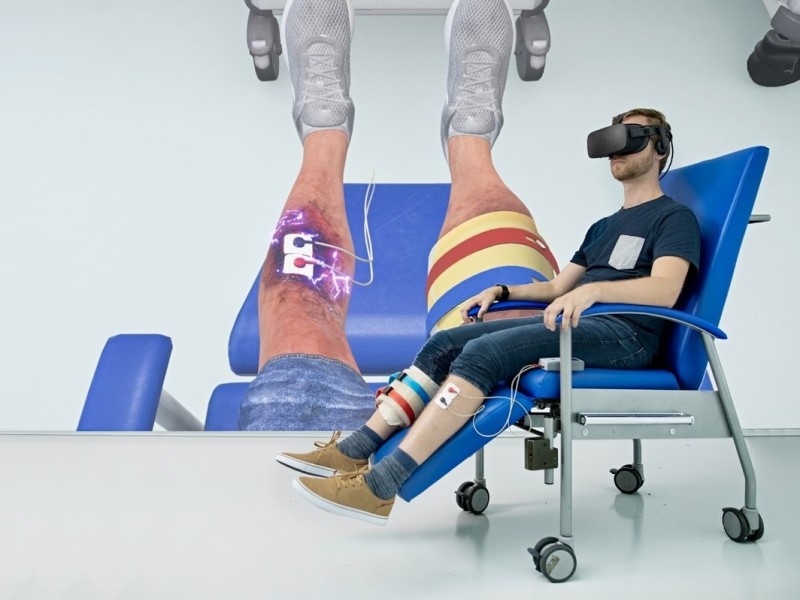
In January 2025, the first validation study of NeuroKit was completed. It involved a comparison between NeuroKit and NeuroCart without interventions. The results were encouraging; the portable NeuroKit proved to reliably reproduce the tests of the NeuroCart. Exadaktylos and his team moved on to the first intervention study, a four-way crossover trial using NeuroKit and NeuroCart side by side to measure the effects of a sedative (lorazepam), a stimulant (modafinil), a dissociative drug (esketamine) and a placebo. The results of this trial confirmed the team's expectations. ‘The results of lorazepam and modafinil are consistently evident in healthy study participants, so we were able to demonstrate with a high degree of certainty that NeuroKit is equivalent to NeuroCart. The results for ketamine were promising, but were less clear, with a relatively high number of missing data points. This is understandable, because due to ketamine participants are in an altered state of consciousness, and the NeuroKit VR glasses put them in a confined space, which may add to their confusion. Follow-up studies will have to determine whether the NeuroKit is suitable for use with ketamine and psychedelics. Overall, I am very satisfied with the results of our validation studies.'
Ready for the US
The next step towards the application of NeuroKit in clinical trials is an external validation study, which will be conducted in the United States by CHDR’s partner ERG. ‘This will be a carbon copy of the validation study we conducted here, with three arms: lorazepam, modafinil and placebo. We are currently training our colleagues at ERG who will be conducting the study. The study will be successful if they achieve results similar to ours. The study is also a good opportunity to critically assess all aspects: the training, our technical support, the integration of the systems, and everything related to data – in short, a full-blown validation that we can perform a trial in the US together using NeuroKit.’
If this validation study proceeds as expected, the first sponsored study in the United States could start in the autumn of 2026. In the meantime, a first test case has already been carried out. Gabriel Jacobs, Research Director Psychiatry, presented the NeuroKit at the Neuropsychiatric Drug Development Summit in Boston in September, where there was a lot of interest in this new approach by CHDR. Exadaktylos: ‘Our next challenge is to demonstrate that we add value for our sponsors. I am confident that we will succeed, but the fact that I believe it does not make it true. We have to prove it step by step. And we are well on our way to doing so.’
Interested in learning more?
More articles from Developing methods